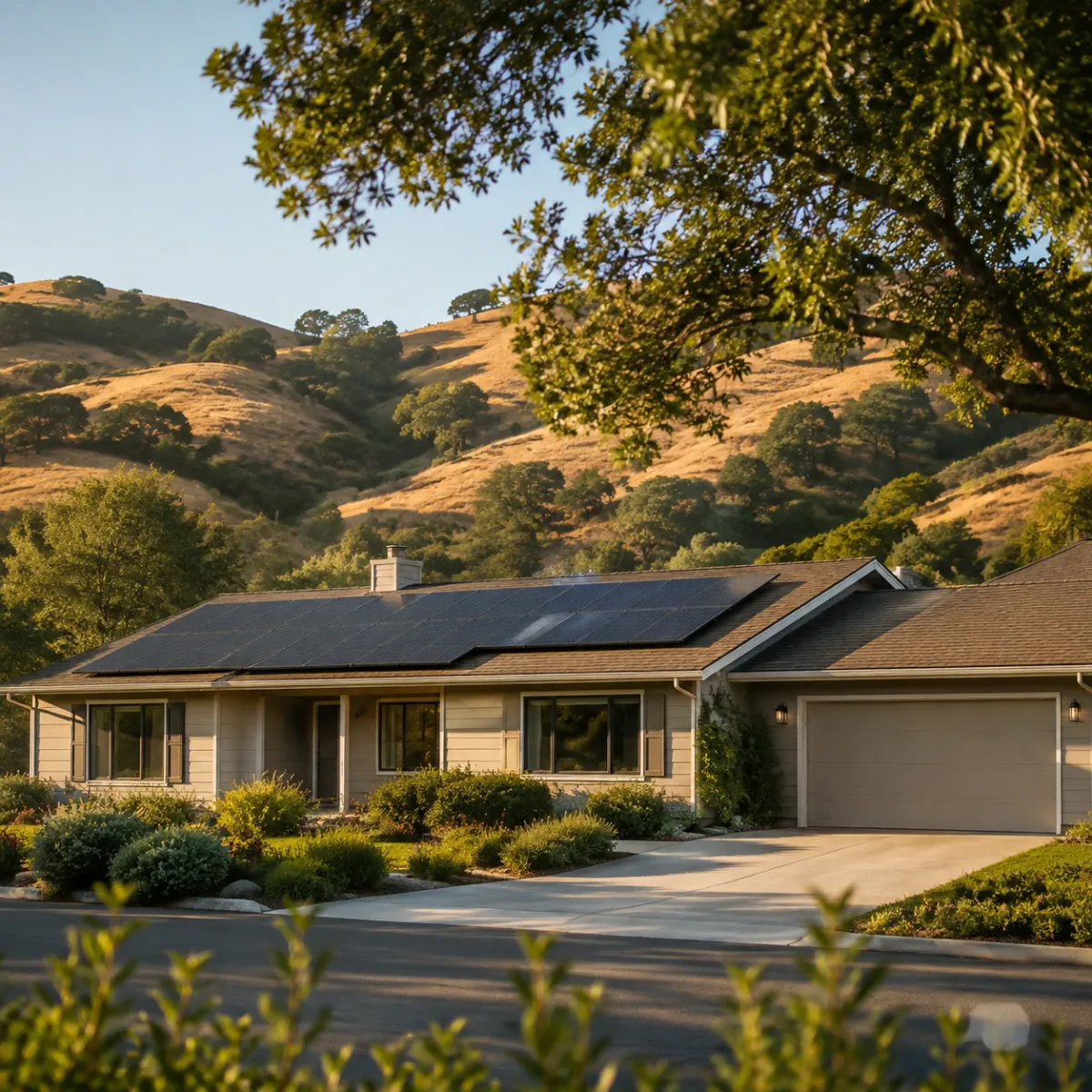
Buying a Home With Solar Panels on the Central Coast: What to Ask Before You Offer
Solar panels on a Central Coast home can mean real savings, or a monthly bill you just inherited from a stranger. The difference comes down to one question almost no one asks early enough: are the panels owned outright, or are they financed, leased, or tied to a power purchase agreement?
Get that answer before you write an offer, and you know exactly what you're buying. Skip it, and you could be signing up for someone else's solar loan without realizing it until you're deep in escrow.
Here's the short version: an owned solar system can add real value to a home and may even let you keep a favorable net metering rate that no longer exists for new installations. A financed, leased, or PPA system transfers a payment obligation, not an asset, and it changes how your lender and appraiser treat the property. Both situations are workable. Neither should be a surprise.
Owned vs. Financed Solar: The Question That Changes Everything
Every solar home falls into one of three categories: paid off and owned free and clear, financed with a loan the seller is still paying, or leased through a lease or power purchase agreement (PPA) where the seller never owned the equipment at all.
A financed system usually comes with a UCC-1 filing, a public record that acts like a lien against the equipment. Title needs to show that lien is being paid off or formally assumed at closing, or you'll inherit it. A leased or PPA system is different again. You're either qualifying to take over someone else's contract with the solar company, or the seller has to buy out the remaining term before closing. None of that shows up on a flyer. It shows up in the solar company's transfer paperwork, which is why It should be pulled it before we write anything.
How Solar Panels Affect a Home's Appraisal
Owned solar can add value to an appraisal, but not dollar for dollar, and not automatically. Appraisers need comparable sales with solar to support an adjustment, and on the Central Coast, solar comps are still thin enough that a good appraiser has to dig for them in Orcutt, Nipomo, and Arroyo Grande alike.
Financed or leased solar generally doesn't add appraised value at all, because the buyer isn't gaining an asset, just taking on a payment. If a seller is pricing in solar value on a system they don't own outright, that's a conversation worth having before the home ever hits the market, not after a buyer's appraisal comes in short.
What a Solar Loan or Lease Does to Your Loan Approval
Lenders treat solar debt differently depending on how it's structured. A solar loan on title can affect your debt-to-income ratio depending on whether it's secured against the home or the equipment. A lease or PPA payment often gets counted as a monthly obligation, the same as a car payment, which can tighten what you qualify for.
This is the part buyers miss most often: get the solar agreement to your lender the same week you go into escrow, not the week before closing. FHA, conventional, and VA loans each handle solar debt a little differently, and your lender needs the actual paperwork, not a summary, to tell you where you stand.
The Net Metering Detail Almost Nobody Explains
Here's the one most buyers, and a fair number of agents, don't know. If a home has an older solar system enrolled in California's NEM 1.0 or NEM 2.0 net metering tariffs, that favorable rate isn't tied to the seller personally. It's tied to the system and the meter, and it can transfer to you as the new owner, with whatever years remain on a 20-year grandfathering period that starts from the system's original Permission to Operate date.
That's a real, verifiable asset attached to the house, since new solar installations no longer qualify for those older, more generous rates under the current NEM 3.0 structure. It's also exactly the kind of detail that needs to be confirmed with PG&E and the solar company before you close, not assumed. Ask for the original PTO date and the current tariff designation in writing, and confirm the seller hasn't expanded the system in a way that could have reset it to today's less favorable terms. There's also pending state legislation that could change how these agreements transfer in a future sale, so this is worth double-checking with current facts at the time you're in escrow, not from something you read six months ago.
Questions to Ask Before You Write an Offer on a Solar Home
Before you put a number on paper, get answers to these:
Is the system owned outright, financed, leased, or under a PPA?
If financed, what's the exact payoff amount, and is that reflected in the seller's net proceeds?
If leased or under a PPA, what does the transfer or buyout process look like, and does it require you to qualify with the solar company?
What's the system's Permission to Operate date and current net metering tariff, and has PG&E confirmed it in writing?
Is there a transferable manufacturer's warranty on the panels and inverter, and a workmanship warranty from an installer still in business?
Was the roof inspected before installation, and does the roofing warranty stay intact with the panel mounts in place?
Why This Matters More on the Central Coast
This isn't generic advice that applies the same way everywhere. Nearly every market Lisa serves, Orcutt, Santa Maria, Nipomo, Lompoc, Arroyo Grande, Grover Beach, and Pismo Beach, sits in PG&E territory, which means the utility side of this conversation is consistent from one town to the next. What varies is the housing stock. Some of the Central Coast's solar installs date back a decade or more, done by installers who've since gone out of business, which makes warranty and transfer paperwork harder to track down the longer a system has been on the roof.
Add in the number of larger lots and agricultural-adjacent parcels out toward Nipomo and Santa Ynez Valley, where owners have layered solar onto barns and outbuildings as well as the main house, and you've got a lot more variables than a standard suburban tract home. This is where a contractor's background matters as much as a real estate license. Catching an unpermitted roof penetration or an installer that no longer exists is the same instinct that's caught foundation issues and hidden roof damage before other buyers ever knew to look.
If you're weighing an offer on a home with solar anywhere on the Central Coast, don't guess your way through it. Call Lisa before you write the offer. She'll pull the ownership status, the payoff or transfer terms, and the net metering paperwork so you know exactly what you're buying, not what you're hoping.


